I have always made fun of cats on Facebook posts. I have, at times, said my cat is better or smarter than your girlfriend just to tease my friends. So, on one random Google search, i came across a video about the Somali posted on www.AnimalPlanet.com, which is also available on YouTube.
Interestingly, the Somali, in this case, was not a descriptor of the people of Somalia as is often the norm. Rather, it was the name for a breed of cat probably of Somali descent (please see the video posted below):
To learn more, you can also check out the link below: http://www.catsofaustralia.com/somali.htm
Monday, June 6, 2011


Monday, May 30, 2011
Pieces of My Heart
Everywhere are pieces of me
Pieces of my heart
The farm we left
The homes we never see again
The fields I played in to train
 |
| Fields I played in to train |
The childhood cut short by displacement
The toys I wanted to keep for me
The schools my siblings attended
My childhood sweetheart
The neighbors we miss
The lost innocence of my youth
The dream to return home
To build a motherland
I barely know
 |
| Home (Motherland) |
The memory of civil war campaign
The ensued devastation
All the mysteries I can’t explain
And remain pieces of me
Lost! Missing!
All a long way gone
Pieces of my heart
I would love to find
Saturday, May 28, 2011
Beating the System!
Did you ever feel what you learned in high school was not challenging enough and that you wanted to look elsewhere for an opportunity to develop the skills you needed or acquire the knowledge you so much craved for? If you answered yes, then you are not alone.
Check out the link posted below (video from CNN) to find out what i'm talking about: http://www.cnn.com/video/#/video/us/2011/05/27/dnt.boy.finishes.college.kero?hpt=C2
Check out the link posted below (video from CNN) to find out what i'm talking about: http://www.cnn.com/video/#/video/us/2011/05/27/dnt.boy.finishes.college.kero?hpt=C2
MARRIAGE ON THE END OF A PHONE LINE
I read Zamzam Abdi's article "Marriage over the phone thrives among Somali community." The article presupposes that the main reason why young women in Africa marry their suitors from abroad, say from London, Toronto or Minneapolis is purely economic. I think that is a very simplistic explanation. It does not take into account the separation that happened to people who were in each other’s lives before the man moved overseas nor does it take into consideration that it costs almost the same raising a family in Africa while the man lives abroad since he has to support himself and also his wife and kids. You can call this double-spending. May be it will even cost less if the man had married and lived abroad with his family.
How about when a young woman returns from the West to marry her prince charming in Africa? Is she doing it for economic reasons? I think, not.
Societies often transition in time and space and cultures thus become dynamic. Social norms change to reflect a society’s new realities. The case of over-the-phone-marriage, though a recent phenomenon among Somalis, also occurs in other non-Somali communities but what is your reflection on this topic?
How about when a young woman returns from the West to marry her prince charming in Africa? Is she doing it for economic reasons? I think, not.
Societies often transition in time and space and cultures thus become dynamic. Social norms change to reflect a society’s new realities. The case of over-the-phone-marriage, though a recent phenomenon among Somalis, also occurs in other non-Somali communities but what is your reflection on this topic?
Wednesday, May 25, 2011
Uncovering the Truth: Government Lies and Media Duplicity on War
War Made Easy is a 2007 hour-long documentary film that analysis U.S foreign policy particularly its involvement in military combats from the 1960's Vietnam to the Iraq war of 2003.
The film features Norman Solomon, an American media critic and is narrated by the American actor Sean Penn. It exposes how successive presidents used effective public relations to start, escalate and sustain wars.
The film features Norman Solomon, an American media critic and is narrated by the American actor Sean Penn. It exposes how successive presidents used effective public relations to start, escalate and sustain wars.
MANUFACTURING CHANGE FOR A NEW SOMALI AGE
The Somali state collapsed in 1991 primarily in the hands of its own people. It’s reeling from destruction as its sons continue to shoot at each other ever since. Enormous devastation of public infrastructure and robbery of private property still persists with unrelenting proportions. Our collective failure to foresee and tackle internal differences makes addressing external intervention almost impossible.
As a matter of fact, Somali nationals already know enough of what happened more than I can inform in this article. So, inventing solutions to the nation’s turmoil are thus in order. The pressing issues must first be addressed in piecemeal. One such issue is to understand the Somali governance system and another is to, as a result, increase civic engagement. Both these matters are necessary precursors to resolving other more substantive political, economic and social issues.
First, the Somali people need to understand the structure and the workings of the Somali political system. We’ve experimented with every governance system there is, whether it’s democracy, autocracy, scientific socialism, Sharia-based but as it appears none has worked effectively and the average Somali has thus lost enough capacity to grasp the fast-changing systems. And for the last 20 years, the several interim governments born out of reconciliation conferences held outside the country all died before any could deliver effective results on Somali soil. To add fuel to the fire, the current transitional federal government has 550 extremely underperforming parliamentarians who unfortunately neither enacted laws nor pursued active public reconciliation during their term. As would be expected of informed citizens, no roaring protest, in words and deeds, has ever been organized against the bloated legislature probably because we don’t understand the inner working of the system.
Interestingly, Somalia has more parliamentarians than the 535-member bicameral congress of the United States yet again the U.S. has 34 times more population than Somalia. This is strangely an absurd number of lawmakers for a country, which depends on foreign aid for its national budget and has no control over its territorial land, sea and space.
Additionally, Somalia has unusually high premier and presidential turnover. Power wrangling has seemingly become an acceptable culture at the top with three presidents moving in and out of Villa Somalia the last ten years alone, and with each hiring a minimum of two prime ministers and firing when they disagreed on policy matters. Executive power struggles affect public service delivery but most of all threatens the political stability and civic understanding of the direction the country is headed.
So to understand politicians for who they are –politicians- is essential. Somali parliamentarians have proved, time and time again, that they care more about their positions and their power, much less about what the common man thinks and needs. We are aware that Somalia’s .SO domain name, a crucial internet infrastructure, has been auctioned off to a Japanese company, embassy buildings around the world sold to foreign investors and the nation’s airspace is, since 1991, run by U.N from offices in Nairobi. These are just but a few gross misappropriation of national resources. And this very much makes Somalis as people who abdicated their national responsibilities to monitor power. Inside knowledge of what happens between our politicians and other stakeholders are critical in order to hold them accountable for their acts, omissions and the wrongs they do commit.
To correct this botched system, educated Somalis must willingly come forward and with unyielding dedication to serve their country. They must come up with a system that works, inject fresh ideas into that political system and must also replace the old guards. This is the right moment. It’s the most opportune time to rise and answer the call of the bleeding homeland. There’s no shortage of a new blood save for structural disorganization. There must be overwhelming willingness to fulfill our duties toward our nation. The public must stand united behind leaders who serve the interest of the Somali people without regard to what region one hails from. In order to achieve this, we must unconditionally respect each other, disavow violence by all means and use clan differences as an opportunity to unite our countrymen and thus bring consensus to our political system.
Second, it’s essential to initiate civic campaign to inform the minds and engage the hearts of the young people. Warring factions have used the youth as a force for destruction for the past 20 years. We must now use them as a force for social change by first making them understand the real consequences of their actions. The youth must realize that, in society, no one is just a single person and should therefore learn to care about the impact of their actions. An individual’s acts can set a precedent (good or bad), reinforce a quality or undermine what others wanted to improve. So they must learn to avoid setting a bad precedent or emphasizing a negative activity that affects society unconstructively.
Besides, it’s important for Somalis to understand that social reform doesn’t just happen. Young Somalis need to learn how to manufacture change for a new Somali age. It takes one person to make a lot of difference. It takes the small example of a few and the deeds of the rest following the pattern to cause a significant transformation in the attitude and behavior of society. Of course, young people are more open to change but they need a directing, patient leadership to guide them to where they necessarily have to be. So those who have the opportunity should not just wait for someone else to create civic engagement and consequently, social change.
In the end, increased public understanding of the Somali political system and a more organized civic society can engineer an effective battle against the culture of political corruption, impunity and can certainly improve human rights and bring a lasting peace to Somalia.
Sunday, May 22, 2011
A NEW VISION FOR SOMALIA!
I have read Ms. Sindiya Darman’s article “Somali First or Somali Only?” about the issue of clan identity and how one responds to it. It reminds me of my own challenges as a Somali and the past encounters I have had.
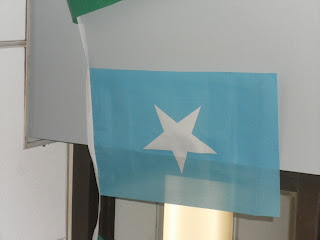
I must say that clan identity is real among the Somali people even in the 21st century and comes up in most discussions especially among men at cafes, business points and other places where people meet. How people respond to it depends on their level of education, age, lifestyle among other factors.
I was a late comer to the city I now live in. I mean there were significant numbers of Somalis present when I moved there. However, I realized that they were not organized and they faced socio-cultural and legal challenges including education, immigration and security. So I decided to make a difference in my community and thus joined a group of seven who were already trying to form a community organization.
Two of the group members came to me at my apartment one late spring day in April and they explained to me how they wanted to form a community-based organization and that they needed me on their team. As if I knew this was going to come up, I accepted their invitation but on the condition that they won’t discriminate among themselves and among the members of the Somali community who we wanted to serve, in accessing services and employment opportunities. And they all agreed with me. So I joined the team. I must have been naïve then. As I would learn later, the team of seven had one Hawiye, one Rahan weyn, one Isaaq and four Darod clan members.
The work began and we registered an organization with the appropriate state agencies and the effort to build it from the ground took off with a smooth start. As the process materialized, two people, one darod and one Isaaq refused to show up for assignments much less bring ideas and money to the table. This however was out of poor performance and poor organization of their priorities rather than anything else. They may probably and, erroneously so, have believed they could still be part of the organization because they belonged to clans that ‘would have to’ be represented at the table no matter what. Not really.
We were down to five. Four months later, the Rahan Weyn brother exited because he believed in his own words “the Darod and Hawiye who swallowed his clan -caused his clan so much havoc- in Somalia wanted to be his president in America and that he couldn’t allow to happen.” I was shocked to hear this because it’s the one condition they promised me will never occur. I tried to persuade him otherwise but he would remain adamant and has thus quit the organization. It’s true and it saddens me as a Somali that the Rahan Weyn community suffered so much in the early 1990s that Baidoa was declared the city of death but how long can we be trapped in the past.
So, four of us remained on the fast moving train. The president and vice president, both darod, began to fight over the replacement of the Rahan Weyn brother, until their rift became irreconcilable. Each wanted to bring someone from their sub-clan on the board. I felt betrayed. I felt that I was on the wrong team and decided to quit. The president and VP each tried to win my loyalty but I knew it was over and never entertained to be treated to such low level politics. I wanted to bring people together and wanted to build a united, stronger Somali community but I realized that I didn’t have the right players on my team. So it was time to call for an end to the game. We timed out. And the organization collapsed with my departure.
Several months later, the Somali residents in my city called for a general meeting and I was invited to participate and was in the end elected to an 11-member team commissioned to build an organization for the community. It took us three months to put up all the structures necessary to build the organization. I then became a founder and the Secretary General of the organization out of a consensus.
When the organization opened an office center, it took many people by a surprise that a young man unknown to most long-time residents of the city was now an executive secretary. Word went around and people started tracing my clan origin. Those who couldn’t find out and of course they were over 98% of them decided to call me that I was from their clan just to give themselves credit or take pride in me while many others also began to call me mean things or clan names just to demean what I stood for: a Somali vision where ideas, education, merit and strong character matter without any need for clan allegiance.
I realized that some people were not interested in the beautiful ideas I had, in the colleges I attended, in the degrees I earned, or in the direction I wanted to take them to and where I wanted them to be in 10, 50 or 100 years, much less what legacy they wanted to leave their kids. Nonetheless, Two years later, the organization we founded is fully operational, providing services for all and sundry.

My decision not to honor clan allegiances comes from my parents. They always told me to make the world my family. To treat other people including those who come from a different clan, faith group etc, like they were my mom and dad if they were senior to me or like a sibling if we were age sets. This is more profound than anything I could learn from anywhere else. Then came my schooling with people from all the nations of the world, all faith groups, varying walks of life or skin color, you name it and we coexisted without stepping on each others’ toes; much more even helping each other when necessary.
As I learned in my working relationship with Somalis, clan divides. People trust you more when they know you don’t have allegiance to your clan because then they know you can dispense justice squarely. It’s up to the young Somalis to envision new pathways for our society and to inspire the change we want to see to happen. I also think that the young, educated and the wealthy are less clannish than others who are neither. One thing i certainly know is that liking and standing up for my clan over others gets me nowhere further than if i treated everyone equally and made everyone a player in my team. Actually, bringing every Somali on my team opens me up for more ideas and more opportunities than if i just stuck with my clan-mates. It's time we begun thinking outside the box especially those who hope to change the direction of Somali politics. And like Ms. Darman, I hope my wife will come from a different clan than mine when that moment finally arrives.
Author's contact: ahmednajaah@hotmail.com

I must say that clan identity is real among the Somali people even in the 21st century and comes up in most discussions especially among men at cafes, business points and other places where people meet. How people respond to it depends on their level of education, age, lifestyle among other factors.
I was a late comer to the city I now live in. I mean there were significant numbers of Somalis present when I moved there. However, I realized that they were not organized and they faced socio-cultural and legal challenges including education, immigration and security. So I decided to make a difference in my community and thus joined a group of seven who were already trying to form a community organization.
Two of the group members came to me at my apartment one late spring day in April and they explained to me how they wanted to form a community-based organization and that they needed me on their team. As if I knew this was going to come up, I accepted their invitation but on the condition that they won’t discriminate among themselves and among the members of the Somali community who we wanted to serve, in accessing services and employment opportunities. And they all agreed with me. So I joined the team. I must have been naïve then. As I would learn later, the team of seven had one Hawiye, one Rahan weyn, one Isaaq and four Darod clan members.
The work began and we registered an organization with the appropriate state agencies and the effort to build it from the ground took off with a smooth start. As the process materialized, two people, one darod and one Isaaq refused to show up for assignments much less bring ideas and money to the table. This however was out of poor performance and poor organization of their priorities rather than anything else. They may probably and, erroneously so, have believed they could still be part of the organization because they belonged to clans that ‘would have to’ be represented at the table no matter what. Not really.
We were down to five. Four months later, the Rahan Weyn brother exited because he believed in his own words “the Darod and Hawiye who swallowed his clan -caused his clan so much havoc- in Somalia wanted to be his president in America and that he couldn’t allow to happen.” I was shocked to hear this because it’s the one condition they promised me will never occur. I tried to persuade him otherwise but he would remain adamant and has thus quit the organization. It’s true and it saddens me as a Somali that the Rahan Weyn community suffered so much in the early 1990s that Baidoa was declared the city of death but how long can we be trapped in the past.
So, four of us remained on the fast moving train. The president and vice president, both darod, began to fight over the replacement of the Rahan Weyn brother, until their rift became irreconcilable. Each wanted to bring someone from their sub-clan on the board. I felt betrayed. I felt that I was on the wrong team and decided to quit. The president and VP each tried to win my loyalty but I knew it was over and never entertained to be treated to such low level politics. I wanted to bring people together and wanted to build a united, stronger Somali community but I realized that I didn’t have the right players on my team. So it was time to call for an end to the game. We timed out. And the organization collapsed with my departure.
Several months later, the Somali residents in my city called for a general meeting and I was invited to participate and was in the end elected to an 11-member team commissioned to build an organization for the community. It took us three months to put up all the structures necessary to build the organization. I then became a founder and the Secretary General of the organization out of a consensus.
When the organization opened an office center, it took many people by a surprise that a young man unknown to most long-time residents of the city was now an executive secretary. Word went around and people started tracing my clan origin. Those who couldn’t find out and of course they were over 98% of them decided to call me that I was from their clan just to give themselves credit or take pride in me while many others also began to call me mean things or clan names just to demean what I stood for: a Somali vision where ideas, education, merit and strong character matter without any need for clan allegiance.
I realized that some people were not interested in the beautiful ideas I had, in the colleges I attended, in the degrees I earned, or in the direction I wanted to take them to and where I wanted them to be in 10, 50 or 100 years, much less what legacy they wanted to leave their kids. Nonetheless, Two years later, the organization we founded is fully operational, providing services for all and sundry.

My decision not to honor clan allegiances comes from my parents. They always told me to make the world my family. To treat other people including those who come from a different clan, faith group etc, like they were my mom and dad if they were senior to me or like a sibling if we were age sets. This is more profound than anything I could learn from anywhere else. Then came my schooling with people from all the nations of the world, all faith groups, varying walks of life or skin color, you name it and we coexisted without stepping on each others’ toes; much more even helping each other when necessary.
As I learned in my working relationship with Somalis, clan divides. People trust you more when they know you don’t have allegiance to your clan because then they know you can dispense justice squarely. It’s up to the young Somalis to envision new pathways for our society and to inspire the change we want to see to happen. I also think that the young, educated and the wealthy are less clannish than others who are neither. One thing i certainly know is that liking and standing up for my clan over others gets me nowhere further than if i treated everyone equally and made everyone a player in my team. Actually, bringing every Somali on my team opens me up for more ideas and more opportunities than if i just stuck with my clan-mates. It's time we begun thinking outside the box especially those who hope to change the direction of Somali politics. And like Ms. Darman, I hope my wife will come from a different clan than mine when that moment finally arrives.
Author's contact: ahmednajaah@hotmail.com
Saturday, May 21, 2011
Living like Doves. Simple!
I returned home from a late breakfast at a nearby restaurant at midday today. On my way home, I passed below a bridge which actually was an elevated railroad. I then heard a low but constant hum right over my head, a manifestation that some vigorous activities were taking place.
I looked up! I saw a dole of doves sitting, mating, feeding and caring for each others’ welfare on the contours of the metals that made the bridge.
The interesting thing was that these doves were sheltering below the bridge amidst lush woods, where many neighboring houses carried For Sale signs. They did not need to buy a house and sign a 30-year mortgage much less fear a bank foreclosure for a property on which they made a 15-year payment. They felt safe in their lives and thus didn’t even need to hire police to guard them. They flew when they wanted, where they wanted. They sorted their differences without deploying tanks on each others’ territories and without even dropping bombs on each other’s homes.
This is the real deal. It’s a lesson for humanity, for all of us. Man needs to learn to care instead of the blinding greed, and the endless want to step on each others’ shoulders to get anywhere.
May be people should think about living simple again. Living like those birds without the amassed material wealth, much of, which are often mortgaged by banks. Like those doves without the hired security guards stationed at their doors. Peaceful, respectful and carefree.
Since I didn't have my camera with me (probably out of simplicity), I didn't take any picture of the scene nor shoot a video. Nonetheless, I have embedded a Youtube video just to give you a better idea of the situation:
I looked up! I saw a dole of doves sitting, mating, feeding and caring for each others’ welfare on the contours of the metals that made the bridge.
The interesting thing was that these doves were sheltering below the bridge amidst lush woods, where many neighboring houses carried For Sale signs. They did not need to buy a house and sign a 30-year mortgage much less fear a bank foreclosure for a property on which they made a 15-year payment. They felt safe in their lives and thus didn’t even need to hire police to guard them. They flew when they wanted, where they wanted. They sorted their differences without deploying tanks on each others’ territories and without even dropping bombs on each other’s homes.
This is the real deal. It’s a lesson for humanity, for all of us. Man needs to learn to care instead of the blinding greed, and the endless want to step on each others’ shoulders to get anywhere.
May be people should think about living simple again. Living like those birds without the amassed material wealth, much of, which are often mortgaged by banks. Like those doves without the hired security guards stationed at their doors. Peaceful, respectful and carefree.
Since I didn't have my camera with me (probably out of simplicity), I didn't take any picture of the scene nor shoot a video. Nonetheless, I have embedded a Youtube video just to give you a better idea of the situation:
Friday, May 20, 2011
Crime Does NOT Pay!
I read Matt Ackland's article (published below) about arrests relating to a drug trafficking bust in several U.S states. The sweep netted 18 individuals including female who transported, distributed or aided in trading khat, which is an illegal drug under the U.S law.
First, my advise to young people who may ever want to engage in such behavior is not to be fooled by the lure of quick gains. Money is not everything in this world to the extent that one takes risks that come with stiff penalties when they fizzle out. Rather, they should pursue other legitimate business or personal opportunities. It's a privilege to escape a war zone country and be resettled in the United States with all the promise of opportunities for those who want to seek.
Second, those taken into custody were either citizens or permanents residents. Citizenship and residency come with responsibility. A respect for the rule of law is an important safeguard from becoming incarcerated and with it from the limitation to access to opportunities.
In the end, one thing that stands true is that no matter what, crime does not pay!
Please read Ackland's article below:
18 Arrested in Khat Trafficking Investigation
Matt Ackland
FOX 5 Reporter
Friday, May 20, 2011
ALEXANDRIA, Va. - FROM UNITED STATES ATTORNEY'S OFFICE FOR THE EASTERN DISTRICT OF VIRGINIA
Authorities have arrested 18 people in four states, including 10 from northern Virginia, for what they allege was an international trafficking ring that distributed nearly 10,000 pounds of the illegal African drug known as khat.
Federal prosecutors in Alexandria charged Yonis M. Ishak of Arlington as the conspiracy's ringleader. He allegedly paid a network of couriers $1,000 each for trips to London to fetch fresh batches of khat, a leaf that gives users a high when chewed.
The drug is popular in East Africa. Of the 18 arrested, all were natives of either Somalia or Yemen.
John Torres, a special agent in charge with U.S. Immigration and Customs Enforcement, estimated the drug's street value at $5 million.
Arrests were also made in Maryland, New York and Ohio.
Others charged as part of the alleged conspiracy include the following:
· Abdulkadir Isse, a/k/a “Abdul” and “Burane,” a naturalized U.S. citizen from Somalia residing in Springfield, Va., is accused of being Ishak’s partner in the khat trafficking organization.
· Suado Mohammed Ali, a naturalized U.S. citizen from Somalia residing in Burke, Va., is accused of assisting Ishak in smuggling and distributing khat.
· Hassan Hassan, a/k/a “Elay,” a legal permanent U.S. resident from Somalia residing in Alexandria, Va., is accused of assisting Ishak in smuggling and distributing khat, as well as laundering the proceeds of khat sales.
· Ahmed Hassan, a/k/a “Dirir,” a naturalized U.S. citizen from Somalia residing in Alexandria, Va., is accused of assisting Ishak in smuggling and distributing khat, as well as laundering the proceeds of khat sales.
· Yonas Beyene, a/k/a “Yonka,” a naturalized U.S. citizen from Somalia residing in Alexandria, Va., is accused of using his position at a vehicle rental agent to assist Ishak in renting vehicles used to transport and distribute khat.
· Ismail Abdi, a legal permanent U.S. resident from Somalia residing in Alexandria, Va., is accused of assisting Ishak in smuggling and distributing khat, as well as storing khat at his residence.
· Hibo Samantar, a/k/a “Fadumo,” a naturalized U.S. citizen from Somalia residing in Annandale, Va., is accused of assisting Ishak in smuggling and distributing khat, as well as laundering the proceeds of khat sales.
· Osman Yusuf, a naturalized U.S. citizen from Somalia residing in Clifton, Va., is accused of using his position as a branch manager for a money service business to remit proceeds from khat sales to individuals located overseas.
· Abdirahman Jibril, a legal permanent U.S. resident from Somalia residing in Fairfax, Va., is accused of using his position as an employee at a money service business to remit proceeds from khat sales to individuals located overseas.
· Adbi Muhumed, a/k/a “Juba,” a legal permanent U.S. resident from Somalia residing in Parkville, Md., is accused of assisting Ishak in smuggling and distributing khat in Maryland, as well as laundering the proceeds of khat sales.
· Harun Salhan, a naturalized U.S. citizen from Somalia residing in Wheaton, Md., is accused of assisting Ishak in smuggling and distributing khat in Maryland, as well as laundering the proceeds of khat sales.
· Lutf Mohamed Albukhaiti, a naturalized U.S. citizen from Yemen residing in Brooklyn, N.Y., is accused of assisting Ishak in smuggling and distributing khat in New York, as well as laundering the proceeds of khat sales.
· Nagi Alashmali, a naturalized U.S. citizen from Yemen residing in Brooklyn, N.Y., is accused of assisting Ishak in smuggling and distributing khat in New York, as well as laundering the proceeds of khat sales.
· Moheeb Nasser, a naturalized U.S. citizen from Yemen residing in Brooklyn, N.Y., is accused of assisting Ishak in smuggling and distributing khat in New York, as well as laundering the proceeds of khat sales.
· Khaled Ahmed Isa, a/k/a “Adnan,” a naturalized U.S. citizen from Yemen residing in Queens Village, N.Y., is accused of assisting Ishak in smuggling and distributing khat in New York, as well as laundering the proceeds of khat sales.
· Abdi Omar Abdi, a legal permanent U.S. resident from Somalia residing in Columbus, Ohio, is accused of assisting Ishak in smuggling and distributing khat in Ohio, as well as transporting khat from New York to Ohio.
· Abokor Gurreh, a/k/a “Mubarak,” Mohamed Farhan,” and “Farhan M. Mohamed,” a naturalized U.S. citizen from Somalia residing in Columbus, Ohio, is accused of assisting Ishak in smuggling and distributing khat in Ohio, as well as transporting khat from New York to Ohio.
The ongoing investigation was conducted by ICE HSI with support from FBI, DEA, U.S. Postal Inspection Service, U.S. Customs and Border Protection, and the U.S. Marshals Service as well as local law enforcement in Virginia, Maryland, Ohio and New York including Arlington County Police Department, Fairfax County Police Department, Alexandria Police Department,
First, my advise to young people who may ever want to engage in such behavior is not to be fooled by the lure of quick gains. Money is not everything in this world to the extent that one takes risks that come with stiff penalties when they fizzle out. Rather, they should pursue other legitimate business or personal opportunities. It's a privilege to escape a war zone country and be resettled in the United States with all the promise of opportunities for those who want to seek.
Second, those taken into custody were either citizens or permanents residents. Citizenship and residency come with responsibility. A respect for the rule of law is an important safeguard from becoming incarcerated and with it from the limitation to access to opportunities.
In the end, one thing that stands true is that no matter what, crime does not pay!
Please read Ackland's article below:
18 Arrested in Khat Trafficking Investigation
Matt Ackland
FOX 5 Reporter
Friday, May 20, 2011
ALEXANDRIA, Va. - FROM UNITED STATES ATTORNEY'S OFFICE FOR THE EASTERN DISTRICT OF VIRGINIA
Authorities have arrested 18 people in four states, including 10 from northern Virginia, for what they allege was an international trafficking ring that distributed nearly 10,000 pounds of the illegal African drug known as khat.
Federal prosecutors in Alexandria charged Yonis M. Ishak of Arlington as the conspiracy's ringleader. He allegedly paid a network of couriers $1,000 each for trips to London to fetch fresh batches of khat, a leaf that gives users a high when chewed.
The drug is popular in East Africa. Of the 18 arrested, all were natives of either Somalia or Yemen.
John Torres, a special agent in charge with U.S. Immigration and Customs Enforcement, estimated the drug's street value at $5 million.
Arrests were also made in Maryland, New York and Ohio.
Others charged as part of the alleged conspiracy include the following:
· Abdulkadir Isse, a/k/a “Abdul” and “Burane,” a naturalized U.S. citizen from Somalia residing in Springfield, Va., is accused of being Ishak’s partner in the khat trafficking organization.
· Suado Mohammed Ali, a naturalized U.S. citizen from Somalia residing in Burke, Va., is accused of assisting Ishak in smuggling and distributing khat.
· Hassan Hassan, a/k/a “Elay,” a legal permanent U.S. resident from Somalia residing in Alexandria, Va., is accused of assisting Ishak in smuggling and distributing khat, as well as laundering the proceeds of khat sales.
· Ahmed Hassan, a/k/a “Dirir,” a naturalized U.S. citizen from Somalia residing in Alexandria, Va., is accused of assisting Ishak in smuggling and distributing khat, as well as laundering the proceeds of khat sales.
· Yonas Beyene, a/k/a “Yonka,” a naturalized U.S. citizen from Somalia residing in Alexandria, Va., is accused of using his position at a vehicle rental agent to assist Ishak in renting vehicles used to transport and distribute khat.
· Ismail Abdi, a legal permanent U.S. resident from Somalia residing in Alexandria, Va., is accused of assisting Ishak in smuggling and distributing khat, as well as storing khat at his residence.
· Hibo Samantar, a/k/a “Fadumo,” a naturalized U.S. citizen from Somalia residing in Annandale, Va., is accused of assisting Ishak in smuggling and distributing khat, as well as laundering the proceeds of khat sales.
· Osman Yusuf, a naturalized U.S. citizen from Somalia residing in Clifton, Va., is accused of using his position as a branch manager for a money service business to remit proceeds from khat sales to individuals located overseas.
· Abdirahman Jibril, a legal permanent U.S. resident from Somalia residing in Fairfax, Va., is accused of using his position as an employee at a money service business to remit proceeds from khat sales to individuals located overseas.
· Adbi Muhumed, a/k/a “Juba,” a legal permanent U.S. resident from Somalia residing in Parkville, Md., is accused of assisting Ishak in smuggling and distributing khat in Maryland, as well as laundering the proceeds of khat sales.
· Harun Salhan, a naturalized U.S. citizen from Somalia residing in Wheaton, Md., is accused of assisting Ishak in smuggling and distributing khat in Maryland, as well as laundering the proceeds of khat sales.
· Lutf Mohamed Albukhaiti, a naturalized U.S. citizen from Yemen residing in Brooklyn, N.Y., is accused of assisting Ishak in smuggling and distributing khat in New York, as well as laundering the proceeds of khat sales.
· Nagi Alashmali, a naturalized U.S. citizen from Yemen residing in Brooklyn, N.Y., is accused of assisting Ishak in smuggling and distributing khat in New York, as well as laundering the proceeds of khat sales.
· Moheeb Nasser, a naturalized U.S. citizen from Yemen residing in Brooklyn, N.Y., is accused of assisting Ishak in smuggling and distributing khat in New York, as well as laundering the proceeds of khat sales.
· Khaled Ahmed Isa, a/k/a “Adnan,” a naturalized U.S. citizen from Yemen residing in Queens Village, N.Y., is accused of assisting Ishak in smuggling and distributing khat in New York, as well as laundering the proceeds of khat sales.
· Abdi Omar Abdi, a legal permanent U.S. resident from Somalia residing in Columbus, Ohio, is accused of assisting Ishak in smuggling and distributing khat in Ohio, as well as transporting khat from New York to Ohio.
· Abokor Gurreh, a/k/a “Mubarak,” Mohamed Farhan,” and “Farhan M. Mohamed,” a naturalized U.S. citizen from Somalia residing in Columbus, Ohio, is accused of assisting Ishak in smuggling and distributing khat in Ohio, as well as transporting khat from New York to Ohio.
The ongoing investigation was conducted by ICE HSI with support from FBI, DEA, U.S. Postal Inspection Service, U.S. Customs and Border Protection, and the U.S. Marshals Service as well as local law enforcement in Virginia, Maryland, Ohio and New York including Arlington County Police Department, Fairfax County Police Department, Alexandria Police Department,
Thursday, May 19, 2011
Obama on the Mideast
President Obama has, today, made a major policy speech about the political changes sweeping across the Middle East at the Benjamin Franklin Hall in the State Department.
He talked about the role of American diplomacy and the need to improve human rights, democracy, and development in education. He acknowledged the necessity to fight bad governance as it relates to corruption and political participation.
Obama stressed on the increasing strength of global interdependence in security, economics and political relationships and America’s pursuit for its Mideast interests. Nonetheless, he stated that those interests must be in line with the legitimate aspirations of the people in that region.
What’s your take on this speech? Where is the missing link? Do you think this new policy speech will make any difference on the Streets of Cairo, Tripoli, Damascus and beyond? How much can Obama’s new policy be effective given that the U.S economy is in slow recovery mode and that Obama has three battle fronts, some of which are running for nearly a decade?
He talked about the role of American diplomacy and the need to improve human rights, democracy, and development in education. He acknowledged the necessity to fight bad governance as it relates to corruption and political participation.
Obama stressed on the increasing strength of global interdependence in security, economics and political relationships and America’s pursuit for its Mideast interests. Nonetheless, he stated that those interests must be in line with the legitimate aspirations of the people in that region.
What’s your take on this speech? Where is the missing link? Do you think this new policy speech will make any difference on the Streets of Cairo, Tripoli, Damascus and beyond? How much can Obama’s new policy be effective given that the U.S economy is in slow recovery mode and that Obama has three battle fronts, some of which are running for nearly a decade?
Wednesday, May 18, 2011
Bring it on, Girls!
I'm sure many of you had watched this video clip on YouTube before.That's not the point i want to make, however. I find a sense of pride and a feeling of satisfaction whenever I watch this clip over and over.
This is a tough game. its a basketball tournament played on away grounds. But its also more. It's a sports story of hard work, of determination, of a fight to rise over the stereotypes of women inability and most of all, its an inspirational story of accomplishment and of paving new paths for millions of young Somali girls, at home and abroad.
This is a tough game. its a basketball tournament played on away grounds. But its also more. It's a sports story of hard work, of determination, of a fight to rise over the stereotypes of women inability and most of all, its an inspirational story of accomplishment and of paving new paths for millions of young Somali girls, at home and abroad.
Tuesday, May 17, 2011
LIMITING FREE FLOW OF INFORMATION
I should tell you that I loved reading the New York Times (NYT) online and read it for quite a while from the comfort of my home or work. However, when I visited that site last night, I received a warning that I only had five more copies left to read for May. “What in the world!” I said to myself. I knew that plans were underway to restrict free online readership but had no knowledge that such restriction has already taken effect.
As it stands, I can only access 20 free copies a month and anything beyond that means that I have to pay for it. Well, it makes a lot of sense that those journalists who make such reservoir of information available deserve an equitable return on their time and effort. But the public also have a right to know what happens at home and around the world in order to make informed choices as pertains to politics, business and anything else in between.
Where the right of one ends and the obligation of another begins has been a murky intersection in the press business especially since the internet has made to our living rooms, and we learned to live with it. Of course, everyone understands that you cannot walk into a neighborhood grocery store, pick up stuff and walk scot free without checking out properly. Nonetheless, online media in general and NYT in this case, has, in the past, made that a real possibility. As of now that possibility seems like a revolving door finally shutting in our face slowly but tightly. Restricted news readership limits access to and free flow of information.
But another contrarian perspective exists. NYT needs my presence on its website as much as I do. After all, I must confess that the internet has changed my reading habits from reading books page by page to what I can describe as skimming. Skimming, in the sense that, I read only portions of an online article and move on to the next newsy, juicy piece on some other website say Washington Post, Aljazeera English or, most of all, Hiiraan Online. The point is that the more traffic a website receives and the more hits readers make on online ads on the site, the more bucks NYT makes. So a website that receives 4 million visitors a month is likely to generate more revenue stream than my startup blog that receives only 1000 or less hits a month. So, a mutual symbiosis exists and of course that’s the reason I receive 20 free articles a month to read on NYT online. Call it a bait, if you may!
However, how many of the rival news sites will follow NYT’s example and whether this new restriction will be sustainable is another question. Today technology changes so fast and so constant. Just like newspapers have become almost redundant, so may online controlled websites be in a matter of months or few years to come. But what cannot be controlled is human ingenuity. If 50 facebook friends can each read 20 articles for free and they share it on facebook, they can still beat NYT restrictions. Whether what do they do is ethical or legal remains open for discussion. However, NYT realized that restrictions on sharing articles on facebook cannot, probably, be enforced-of course they will need to hire thousands of costly cyberpolice-, so it allowed it to happen!
Monday, May 16, 2011
How Much Blessed Do You Feel?
How much blessed are you? You are healthy, access quality education, drive to work, and most of all you have food on the table, every day. These are things that for some in your state, in your city and definitely in the building you live do not enjoy regularly. So how do you reflect on your station in life and does it make you think about the welfare of others, and of your own in a more insightful way. Does that make you consider what you can do to change it, to improve the condition of life for others, whether it’s volunteering your time at a local school or doing something more profound? You never know whether the person who cannot put bread on the table now is going to be the chief executive officer of the company you work for after you earn a graduate degree or after you face mid-career crisis and switch jobs. God forbid but in a rapidly changing world that remains a possibility.
Five weeks ago, I was at a suburban Marriot hotel for a two-day conference and I wanted to ask a female housekeeper for information. However, she couldn't talk to me because she didn't speak English. She, nonetheless, tried to direct me through hand gestures. Hand gestures I very much appreciated.
Today a man, looking for a job, came over to my desk, and just like the housekeeper, he spoke no English. Certainly, these two persons spoke other languages and fluently so.
If you live in North America, you understand how much important it’s to speak English. In the most simplistic example, it, more or less, determines if you would be able to access a job opportunity and as a result put food on the table. You can disagree with me if you will. On a more profound way, it limits your career progression if you already have higher or other professional degrees.
An example of this is Asal, an Iranian immigrant to the United States, who I met four years ago. Asal had a master’s degree in Psychology and a bachelor’s in education. Nonetheless, she worked at a retail, chain store as a logistics support staff with a per hour gross pay that was less than $8. So sad! Huh. The reason was that she didn’t speak English.
In retrospect, I feel so much blessed that at least I don't need an interpreter around me to access basic services and I volunteer every week in my community to improve the lives of people who deserve a lot better! But how much I would have reflected on this is something I wouldn’t have imagined much without meeting those two adorable people I have mentioned above! Now I know a little reflection goes a long way.
Friday, May 13, 2011
Moments to remember, to share and to reflect
Some moments in life are more remarkable, more satisfying. Getting married, birth of a new baby, family reunion, vacationing are all milestone to treasure, to look forward to.
I had some little but memorable moments the last few days. Moments that represent small victories in a world where there's always plenty of equally nagging moments. In short, they were profound and extraordinary in every sense of those words.
On April 7-8, I participated in the 36th annual spring conference of Illinois Community Colleges Journalism Association, a two-day event that brought together 17 schools and more than 140 attendees.
Many student journalists have won individual awards on that occasion but most of all, The Uptown Exchange, the newspaper I then served as a staff writer, garnered third place in Overall Excellence in the Layout section.
Then the Community Service Awards came, where my colleagues, The Uptown Exchange staff and I were awarded individual certificates in recognition for civic engagement and service learning, at a dinner party, on April 28, from 6 p.m. to 8 p.m.
A day later, I was awarded two diplomas at a Scholar’s Luncheon, an event organized to recognize high achieving students, and held at Marcello’s Restaurant, a cozy restaurant near downtown Chicago from 1 p.m. to 3p.m. One diploma was to honor my contribution, participation and completion of Trio Student Support Services’ socio-cultural and leadership seminars, and the other for maintaining an exceptionally high GPA.
But the most significant moment of all came on Wednesday May 11, at a Graduation Pavilion when I was asked severally to rise for achieving the highest honors, for being a lifetime member of an honor roll society and to receive a college degree thereof with the rights, honors and privileges that come with it.
To be recognized four times in a span of about thirty days is in the least humbling. As for me, I feel truly appreciated in the community I’m a member of and in the duties I rise to perform every day. It’s also a new challenge to keep up the efforts that led to those moments, to maintain the momentum and to inspire others to follow, much more to lead.
Last but not the least, it’s a moment to thank those who, by design or default, contributed to those honorable moments whether teachers, friends, workmates or family. In the end, I feel these are moments to remember, to share and to reflect.
Thursday, May 12, 2011
Same Journey…Different Endings
I was riding the Red Line on my way to school today at around 8 o’clock. A standing passenger who wanted to talk to me drew my attention. He was a twenty something man with curly hair and brown eyes.
I responded to him with hi.
“Do you know me?” he asked
“I guess I do” came my answer. I didn’t quite remember him then; however, I ran through my mind to get clues of who he was and where I met him.
As we interacted, he reminded me that we took a class together a while ago. Of course that was my first class at the college during my freshman year.
Fekadu has failed the class and has since dropped out of school.
He asked about me and what I did after that class and I explained to him that I kept moving on despite the challenging workload and that today was my graduation.
He was intrigued how fast time has passed that I was now finishing college. We both smiled.
Nonetheless, I explained to him that failing a class should not be an end in itself. Rather, it should be an opportunity to reevaluate oneself and to decide on what changes should be undertaken. That he can always access free tutoring services on campus. Additionally, what’s more important is that he can sign up for other classes, which he can certainly perform exceptionally better and that would encourage him to move on.
Looking back, Fekadu and I embarked on the same journey, the same time but we arrived at different destinations. Neither of us had an easy ride. We both were immigrant youth navigating through a culture and society was new to us. We both were limited English language skills.
I firmly believe that Fekadu had burning ambitions. It’s those ambitions which brought him to school to enroll for a math class and to pay for it out of his pocket. Yet again, he needed support and as it appears he did not receive immediate help either because he didn’t know where to find it or he was simply distracted by other more challenging aspects of life.
In the end, everyone deserves an opportunity to earn an education that works. Challenges on the way to accessing quality education are many and are more pressing on those on the periphery of society whether these are the poor, the new immigrants, the disabled, minority groups, women among others. It would be good idea if institutions targeted those groups of society that need the real support without taking away much from those who have the drive and the capacity to achieve their dreams.
Tuesday, May 10, 2011
FAITH AND HOPE
I met two middle aged men sitting before an old high rise building while I was out to shoot environmental photos for a class assignment, on Wednesday, Apr. 4, from 2 p.m. to 3 p.m. I started a conversation with them in which each responded differently. One seemed uninterested while the other whom I will refer to as Bill continued to chat with me. I asked Bill for an opportunity to pose for my photo shoot and he agreed.
As I took one picture after another, he began to ask me questions on why I was taking the photos and what I would do with them afterward. Questions I answered honestly.
Interestingly, he opened up to me and even shared that he was a student in the same school whose project I was working on some 30 years ago, at a time when I was not even born. Then he wanted to study for a degree in Registered Nursing but failed to secure admission due to stiff competition for limited seats. Nonetheless, he still nurses the idea of coming back to school to finish his education and he even encouraged me to work hard at mine.
I advised Bill to listen to his inner call and find his direction in life even if that means going back to school he quit three decades ago. Unfortunately, Bill also acknowledged that he fell through the cracks and was now past his prime age. So going back to school would not be an easy task.
Bad things happen to good people. Life’s experiences are however sweet lessons for reflection. Two things one needs in those circumstances are faith and hope. Confidence in your own skin and trusting yourself are the first steps to build a strong faith, not only to start but also to accomplish any project. Once you have a sense of faith, hope that, despite the difficult challenges of life, you can get through is essential. Hope thus helps you endure hardships until you finally earn the fruits of your endeavors.
For a related story of hope, please check out: http://www.guideposts.org/personal-growth/advice-finding-hope-after-catastrophic-loss
Monday, May 9, 2011
NEWS ABOUT THE WORLD
Anything that has a beginning must surely have an end. When I first started blogging, it was a cold Saturday afternoon in the third week of January, just a week after spring semester started in full swing. I began publishing, mostly, news articles on my blog, then an experiment in an unfamiliar territory known informally as blogosphere and I had to do it as part of a web production project for an advanced journalism class I was registered for. Surprisingly, it turned out to be a passion I wanted to pursue.
Five months later, I made about 27 posts on the blog I then named Truman, Uptown and Beyond (T.U.B). Over the course of that period, my blogging was limited to events that happened on campus or on the immediate vicinity of the school. Nonetheless, weekly blogging has helped me cover hyper-local news and I have certainly mastered the art of blogging, (Do I have the right to brag?) to say the least. Now it’s a warm, bright May Day outside my office and the semester has come to a sudden, unexpected end. More interestingly, I’m shy of two days before I’m awarded a college degree in journalism at what would be a colorful graduation ceremony coinciding the centennial anniversary of the school, and with the presence of luminaries from the public and business sectors. Call it another milestone!
And now the hard part comes: breaking those old, school habits (of course, I’m no longer a student) whether that was following professor’s instruction or seeking instructor’s support when necessary. Moving on to establish myself and to do something constructive with my training, before even finding a job in my field of specialization is my new drive. To achieve this goal, I need to take several steps as pertains to this blog:
First, effective today, my blog will be renamed, even though it will remain a news blog, News about the World and the URL address changed to IIBAASHAAL. Future change of name may be indispensible to respond to the demands of time and circumstance.
And last but not the least, T.U.B ceases to be a school project. Rather, it will be a professional journalist’s platform and will thus cover news, commentary and analysis about the world in a very engaging and relevant way.
Monday, April 25, 2011
A Trip to the Aquarium: Exploring Life Beyond the Land
Truman Physical Sciences Professor, Dr. Rahm Almarzah, has taken the Oceanography 101 class for a trip to the Shed Aquarium, located south of downtown Chicago, on Sunday, Apr. 24, a day before the end of the spring recess.
The students gathered at the main building’s northeast gate, off Wilson Street, at 9 a.m. and the team, numbering about 20, departed by 9:30 a.m., boarded the Red Line and headed south.
Before departure, Dr. Almarzah explained the itinerary and advised students to observe safety regulations both on their way down and at the aquarium, too. He further joked with students that our “ride on the CTA Red Line is not insured by the school” and that everyone should exercise extra caution as a personal responsibility.
 |
| Variety of Fish from the Great Lakes |
At the aquarium, students had the opportunity to observe the variety of life whether based on fresh water lakes, rivers or the salty massive oceans.
According to Sheddaquarium.org, the official Website, the Aquarium, which is a part of the museum campus, hosts more than 32000 animals ranging from whales to snails.The Oceanography class explored all these animals free of cost thanks to the professor who organized the tour.
In addition, while the rest of the regular visitors had to form long lines extending more than one city block and go through a registration process, Dr. Almarzah’s class were accorded special access through a back door and enjoyed watching the aquatic life without a hassle.
 |
| Dr. Almarzah's Class Pose for a Group Photo after the Tour |
“It was so cool,” said Alex Sonov one of the students who went to the aquarium and that he “loved it.” Sonov’s love was demonstrated when he actually remained behind for another three hours while the rest of the students left after the two-hour recommended class visit.
School Resumes after Recess
Truman was, on Monday, back to business after the week of spring break. Offices and classrooms opened early to serve students who reported for morning classes and the normal school operations picked up pace slowly ahead of the last three weeks of the spring 2011 semester.
Nonetheless, it’s important to point out that this semester’s break was uncharacteristic in nature. First, unlike the City Colleges of Chicago’s recent past traditions, this break came between April 18 and 24, just a week before the final exams start. Second, most schools, around the nation and particularly those in the Midwest, released students for spring recess on the end of March or on early April.
And finally, the break fell on the week of Easter and has thus given students, staff, and faculty an opportunity to observe the holiday with their families, and loved ones. This was welcome for many who have a strong family tradition to celebrate the occasion.
For a link to calendar events happening this week, including withdrawing from a class or registering for summer classes, please check out: http://trumancollege.edu/calendar/
Subscribe to:
Posts (Atom)